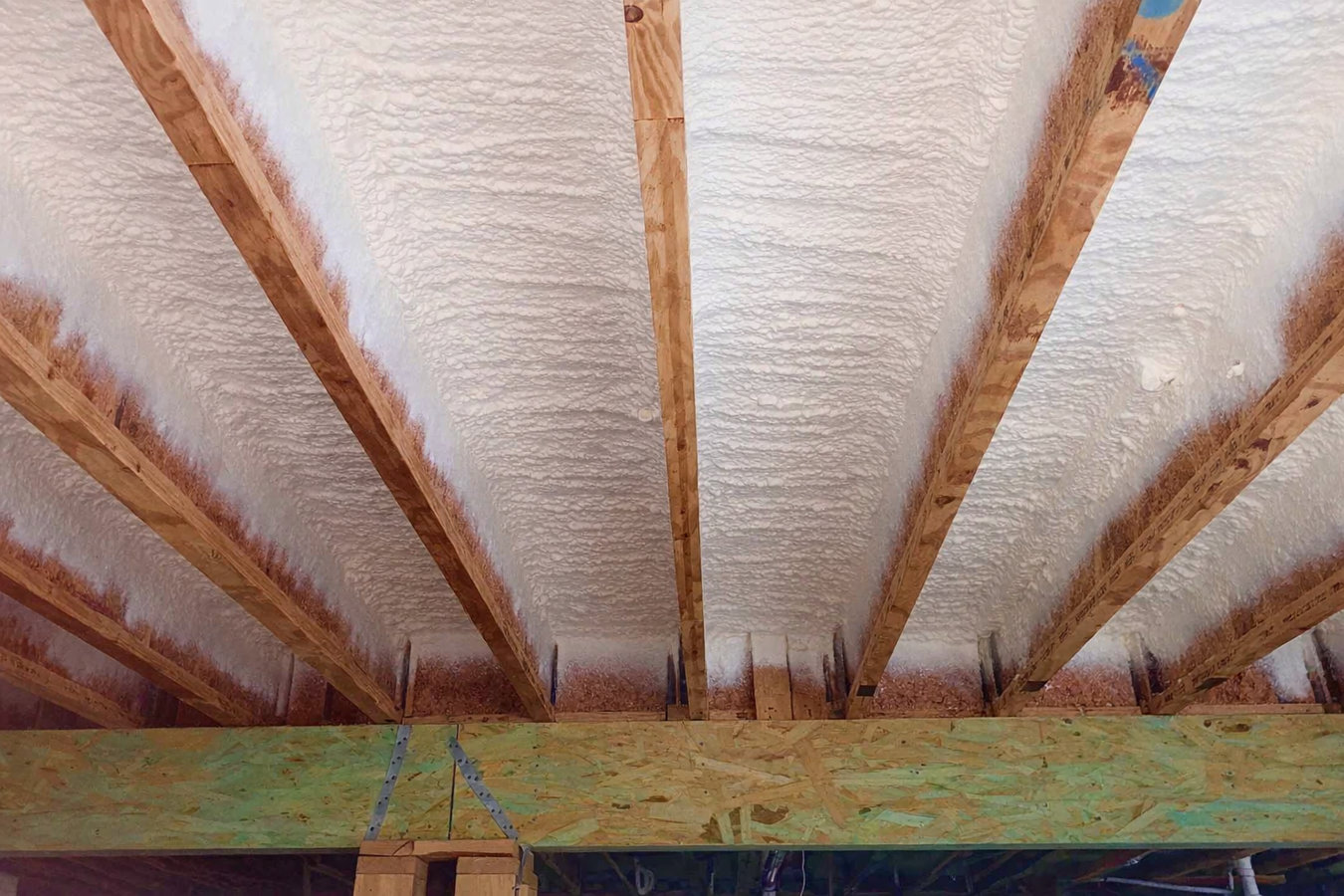
Goose Creek summers push heat and moisture up through unprotected crawl spaces. The right insulation and moisture control underneath your home makes every room feel better and costs less to cool.
Crawl space insulation in Goose Creek, SC acts as a thermal barrier between the ground and your living area, slowing heat from pushing up through your floors in summer and keeping conditioned air from escaping below - most residential jobs take one to two days and require no disruption to the living space above.
Many Goose Creek homes were built on crawl space foundations rather than slabs, particularly in neighborhoods developed in the 1970s through 1990s. In the Lowcountry's humid climate, that space under your house is under constant pressure from ground moisture and warm air. Insulation without adequate moisture control won't last - and the wrong approach can make things worse. That is why a good crawl space job addresses both the thermal barrier and the moisture problem at the same time. If you also have older material that needs to come out first, we handle insulation removal as part of the same project.
There are two main approaches for crawl spaces: insulating the floor joists above the space, or sealing the entire crawl space and insulating the foundation walls instead. In this climate, sealing the space and treating it as a conditioned area is increasingly the recommended approach - it controls moisture far more effectively than open vents and floor-joist batts alone.
If your hardwood or tile floors feel warm underfoot during summer even when your air conditioning is on, heat is rising from an uninsulated or under-insulated crawl space. In Goose Creek's long, hot summers, an unprotected crawl space acts like a heat reservoir that pushes warmth up through your floors all day long.
A musty or earthy odor - particularly one that gets worse after rain or on humid mornings - often means moisture is building up in the crawl space below. Goose Creek's humidity gives mold and mildew ideal conditions to grow on damp insulation and wood, and that smell travels up through the floor. If the odor is strongest near floor vents, the crawl space is likely the source.
If your summer energy bills have been climbing but your habits have not changed, a failing or missing crawl space insulation system is a likely factor. Heat and humidity entering through an unprotected crawl space force your air conditioner to work harder, and the effect compounds during Goose Creek's long cooling season.
If you peek into your crawl space with a flashlight and see insulation that is hanging down, looks dark or discolored, or feels damp, it has absorbed moisture and is no longer doing its job. Old fiberglass batts - common in Goose Creek homes built in the 1980s - are especially prone to absorbing moisture and falling away from the framing over time.
We assess the crawl space first - its current insulation, moisture condition, and how air is currently moving through it - before recommending a solution. For older Goose Creek homes with vented crawl spaces, we often recommend closing those vents and insulating the foundation walls instead of the floor joists. That approach, paired with a ground cover, creates a sealed space that controls moisture year-round. When needed, we can also add a crawl space vapor barrier beneath the home to block ground moisture from ever entering the space in the first place.
Every estimate is written and itemized so you know exactly what is being done, what type of insulation will be used, and whether moisture control is included. We do not install insulation over an existing moisture problem - if we find one during assessment, we tell you before the job starts and explain what needs to happen first.
Suitable for homes with dry, accessible crawl spaces where moisture is not a significant concern.
The recommended approach for most Goose Creek homes, controlling moisture and heat more effectively than open-vent systems.
Added as part of any crawl space job where ground moisture is identified as an active or potential problem.
For homes where existing insulation has absorbed moisture, fallen from the framing, or shows signs of mold or pest damage.
Goose Creek sits in the South Carolina Lowcountry, where summer humidity regularly pushes above 80 percent and air conditioning runs from late April through October. That persistent moisture means the crawl space under your home is under constant pressure from humid air rising off the ground. Older homes in Goose Creek were built with vented crawl spaces, which building codes at the time required - but in a humid coastal climate, those vents actually pull in warm, wet air that condenses on cool surfaces. Many local contractors now recommend closing those vents and sealing the crawl space entirely, which is a more involved job but far more effective for the long term. Parts of Goose Creek and the surrounding Berkeley County area near tidal creeks and low-lying land may also experience elevated ground moisture after heavy rain, making proper moisture control even more critical. Homeowners in Ladson and Moncks Corner face similar crawl space conditions and the same need for moisture-aware solutions.
The Lowcountry is also one of the most active termite regions in the country, and a crawl space inspection before insulation goes in should include checking for any wood damage or active pest pressure. Insulating over damaged wood traps the problem and makes it worse over time. A thorough contractor will flag any wood damage found during the assessment and let you decide how to address it before the insulation work begins. The U.S. Department of Energy notes that properly insulating and air-sealing a crawl space is one of the highest-impact energy upgrades for homes in warm, humid climates.
Call or submit a form and we respond within 1 business day. We'll ask a few basic questions - the size of your home, whether you've noticed moisture issues, and what you know about what's currently in the crawl space - so we show up prepared. No obligation at this stage.
A contractor will physically enter the crawl space through the access hatch to see what is there. We look at the existing insulation, the condition of the wood, any signs of moisture or mold, and how the space is currently vented. This usually takes 30 to 60 minutes, and we walk you through what we found before leaving.
Within a day or two you receive a written estimate that breaks down what will be removed, what will be installed, and whether moisture control is included. Read it carefully and ask questions - a reputable contractor welcomes clarifying calls, especially when comparing estimates.
The crew removes any old material, installs new insulation, and lays a ground cover if included in your scope. The work is done entirely below your living space - floors, walls, and ceilings are not touched. Most jobs complete in one to two days, and there is no curing time: your home is fully usable immediately.
Free estimate, no-pressure assessment, written quote before any work begins.
(843) 931-2094We assess moisture conditions in your crawl space before recommending a solution. Installing insulation over a moisture problem does not fix it - it traps it. If we find an issue that needs to be addressed first, we tell you before any work begins.
Every project starts with an on-site assessment and a detailed written estimate before any work begins. You know the full scope and price up front, so there are no surprises on the final bill and no guesswork about what you are paying for.
We work in Goose Creek's specific conditions every day. The combination of high humidity, long cooling seasons, and older vented crawl spaces means the right approach here is different from what works in drier climates. We recommend solutions that hold up in this environment, not just whatever is fastest to install.
Not every contractor has experience with full crawl space encapsulation - sealing vents, insulating walls, and installing a ground barrier as a complete system. We do this work regularly in Goose Creek and can explain the difference between approaches so you can choose what makes sense for your home. The Building Science Corporation recommends sealed crawl spaces over vented ones in humid climates.
Every crawl space project we complete starts with an honest look at what is actually down there - and ends with a space you can be confident about, not one where you're hoping for the best. That is what Goose Creek homeowners deserve, and it is how we work.
Complete the thermal envelope of your Goose Creek home by addressing exterior and interior wall insulation alongside crawl space work.
Learn MoreA ground moisture barrier installed beneath your home works alongside crawl space insulation to stop humidity at its source.
Learn MoreGoose Creek summers are hard on unprotected crawl spaces. Schedule your free crawl space assessment now and know exactly what needs to happen before the next cooling season starts.